“Help! My Ball Python Won’t Eat” – The Troublesome Habits of a Popular Snake – Part 1
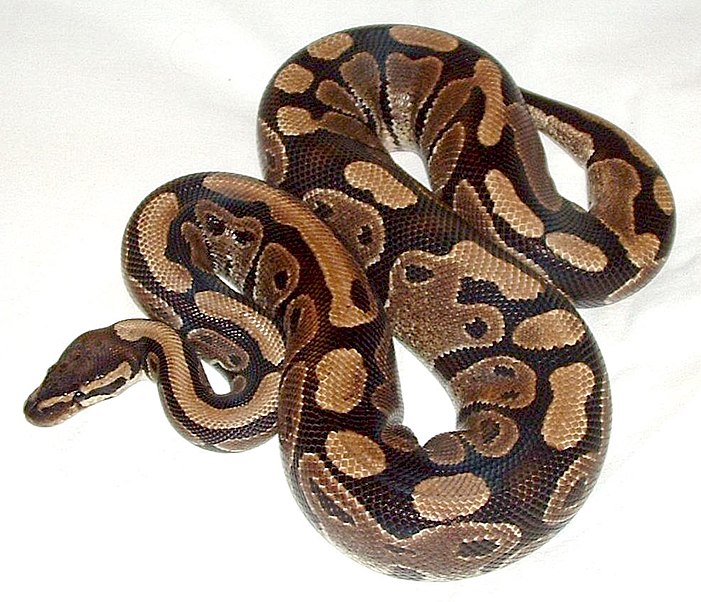 Hello, Frank Indiviglio here. Also known as the Royal Python (Python regius), this smallest of Africa’s pythons is also the one best suited for captivity…one Ball Python lived at the Philadelphia Zoo for a record 47.6 years. However, even long-term captives often exhibit the disturbing habit of refusing food for long periods. This tendency is the source of a great many questions that I receive from both neophyte and well-experienced snake keepers.
Fasting as a Survival Mechanism
Ball Pythons inhabit some of the most hostile habitats in Africa and, due to cold temperatures or drought-induced shortages of prey, must sometimes fast for extended periods – much longer than other snakes. From experience with other reptiles, it is becoming clear that circadian rhythms (“internal clocks”, in a sense) often govern behavior of captive animals many generations removed from the wild. Unfortunately, there are no hard-and-fast rules. Unlike some reptiles, which cease feeding in winter even if kept warm, Ball Pythons go on and off feed according to a schedule that only they understand!
Another point to bear in mind is that captives generally eat far more than wild snakes, and expend little energy in hunting, and so may eventually need to eat at less frequent intervals.
Judging Your Snake’s Condition
 A fast of 3-4 months, or in some cases even longer, will do no harm if your Ball Python is in good weight – they are very effective at matching their metabolisms to food intake (Please see article below). A good way to tell if a snake is too thin is to check for a protruding backbone. This will appear as a distinct ridge along the back – quite visible and different from just the outline of the bone. If this ridge is not evident, then try offering food every 10 days to 2 weeks, or consider using some of the techniques covered in Part II of this article.
There are a few tricks that sometimes induce reluctant snakes to feed. In Part II of this article we’ll discuss “scenting”, novel prey items, hiding food and other techniques that you can try. Until then, please write in with your questions and comments.
Thanks, until next time,
Frank Indiviglio
Further Reading
An understanding of the Ball Python’s life in the wild is critical if one is to keep these fascinating creatures properly. Please see my 2 part article, Ball Python Natural History, for more information.
Please see How Snakes Grow Despite Food Deprivation for the story behind snakes’ amazing abilities to survive and thrive during prolonged fasts.
Pet Ball Python image referenced from wikipedia and originally posted by Mokele
